
FIXATION Hiding Spots
Where to reset, where you die, and why the first closet is a trap.
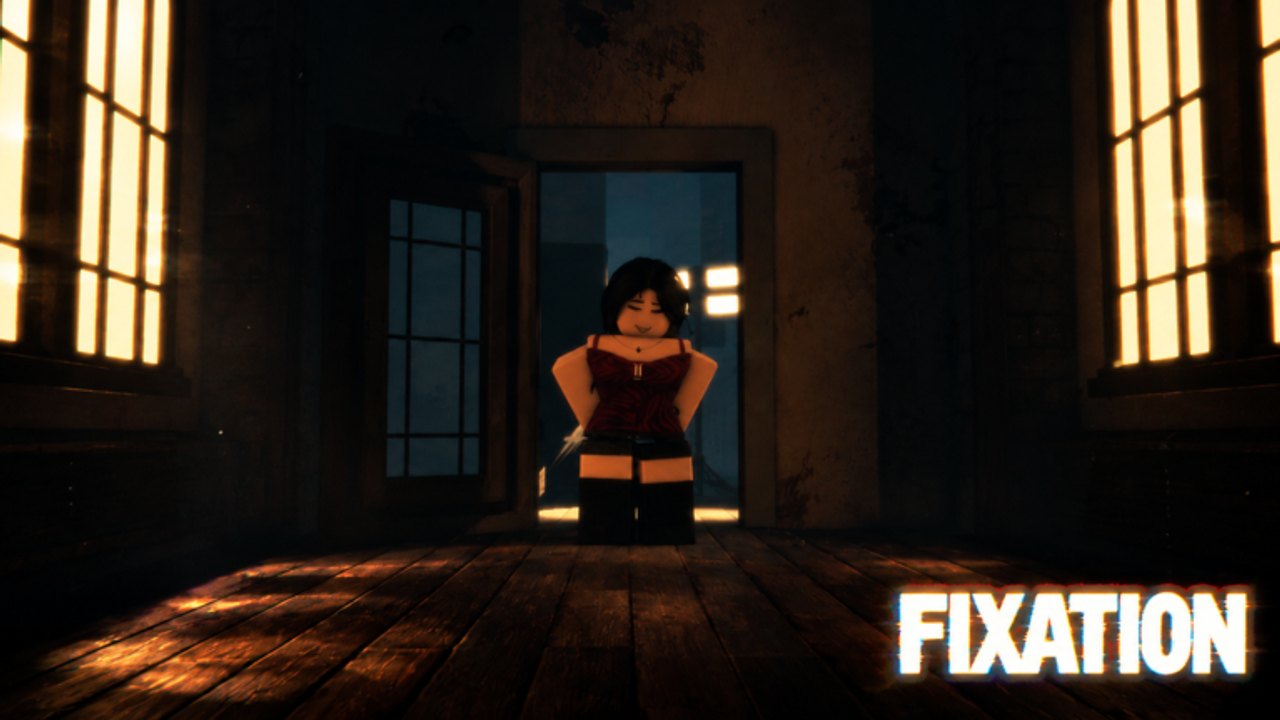
Hiding in FIXATION is a reset, not a home. The house is small, the hunter is one player with a knife, and official stills already tell you what the camera loves: a lit doorway and a dark hall. If you treat every cupboard as a win condition, you will be the first body. Use this page with how to survive and the house walkthrough. Hunters should read it too; you cannot flush a room you cannot name.
What a hide is for
A hide buys time and information. Time is the few seconds the Fixation spends checking the wrong wing. Information is a call you make while you are still alive. A hide that gives you neither is a coffin with extra steps.
The round is Survival / 1 vs All, max nine, online co-op on the living side. You do not need a named puzzle code to leave a room. You need an exit that is not the hunter. If you cannot point at that exit before you crouch, do not crouch.
The doorway is not cover
The most famous still is the threshold: lamp behind the hunter, dark corridor in front, windows on both sides. Survivors who peek that frame are backlit. Survivors who stand in it are a silhouette gift. Hunters who idle in it own the camera. Treat the doorway as a lane, not a closet.
If you need to cross a threshold, cross it. Do not wait on the sill to “see if she is coming.” She is. Details live on the walkthrough because the room names will grow; the silhouette rule will not.
Closets, corners, and lamp rooms
Official media is consistent: wooden floors, hanging lamps, high windows, worn plaster. Those props create three bad instincts.
Closets and furniture clusters. The first cupboard off spawn is where panicked survivors stack. The hunter checks it once because everyone checks it once. Hide there only if you just broke line of sight and you will leave in two seconds. A 20-second closet is a kill cam.
Corners with no second door. A pretty lamp room with one entrance is a bowl. The hunter walks the rim. You have nowhere to spend space. If the room is beautiful in the thumbnail, assume it is a trap until the updates hub says a second exit was added.
Under the lamp. Light is how the hunter reads you. Crouching in a bright pool is not stealth. Crouch in the falloff, then leave when the wood floor gets loud.
Spacing beats stacking
Two survivors in one tile is one lunge for two downs. The chase art is a close-range knife threat. If your stack is hugging the same wardrobe, you are volunteering. Keep distance in space and together in calls. That is the whole co-op lesson applied to furniture.
A good hide is a staggered reset: one player peeks a hall, one player holds a second room with an exit, nobody sits in the same box. If you cannot hear a teammate, you are not hidden. You are isolated.
When to leave
Leave when:
- Footsteps get louder on wood and you still have an exit.
- A teammate calls the hunter in your wing.
- You have been still long enough that the round clock is the only thing moving.
- The hunter checked your room and turned away. That is the gift. Spend it on space, not on a second crouch.
Stay only when the hunter is committed to another floor or when a teammate is buying you the second you need to rotate. Staying because you are scared is how common mistakes get their own page.
Hunter notes (so you stop wasting patrols)
Do not tour every cupboard. Pick a wing. Check the obvious hide once, leave pressure, and cut the house in half. Survivors who hear you vacuuming furniture will rotate behind you. The Fixation tier ranks pathing over greed. A hunter who lives in closets is B-tier with a knife.
After a down, look at the rest of the map before you celebrate inside the kill room. The remaining survivors just learned where you are. Your next hide-check should be the far wing, not the same wardrobe.
Device notes
On mobile, landscape so the joystick is not sitting on the cupboard you are trying to leave. On PC, decide shift-lock before you crouch; fighting the camera in a closet is how you miss the exit. Full layouts: controls. Sound on. Wood floors tell the truth more than the scoreboard.
What this page will not invent
Sushi Deluxe has not published named hide objects, locker IDs, or a basement code. We will not fake a list of “best lockers.” When rooms get names, they will appear on the walkthrough and this page will point at them. Until then, rank hides by exits, light, and how many bodies already used them this round.
If a YouTube thumbnail promises a secret vent, treat it as a different game until the updates hub confirms a new space. Copycat places steal the grin. They do not steal this house.
Practice loop
Queue as survivor. Survive one round without using the first closet. Queue as hunter. Win one round without checking the same cupboard twice. Then read getting started if the lobby still confuses you, or how to play as the Fixation if you keep losing the knife player. Hiding is a habit. The house punishes habits that look like safety and are actually a queue.
Frequently Asked Questions
Quick answers to the most common questions.
Where is the best hiding spot in FIXATION?
Wherever you have a second exit and a call. The first closet is usually the worst. See the walkthrough for the doorway rule.
Should I hide as soon as the round starts?
No. Move off spawn first. Standing still is a silhouette. The beginner guide covers the first ten seconds.
Do lockers work?
Treat any one-entrance furniture as a short reset, not a home. Stacking there is a common mistake.
I am the hunter. Should I check every hide?
Once per wing, then leave pressure. Pathing beats vacuuming. Read how to play as the Fixation.