
FIXATION Survivor Tier List
Rank the habits, not fake characters, while FIXATION is still new.
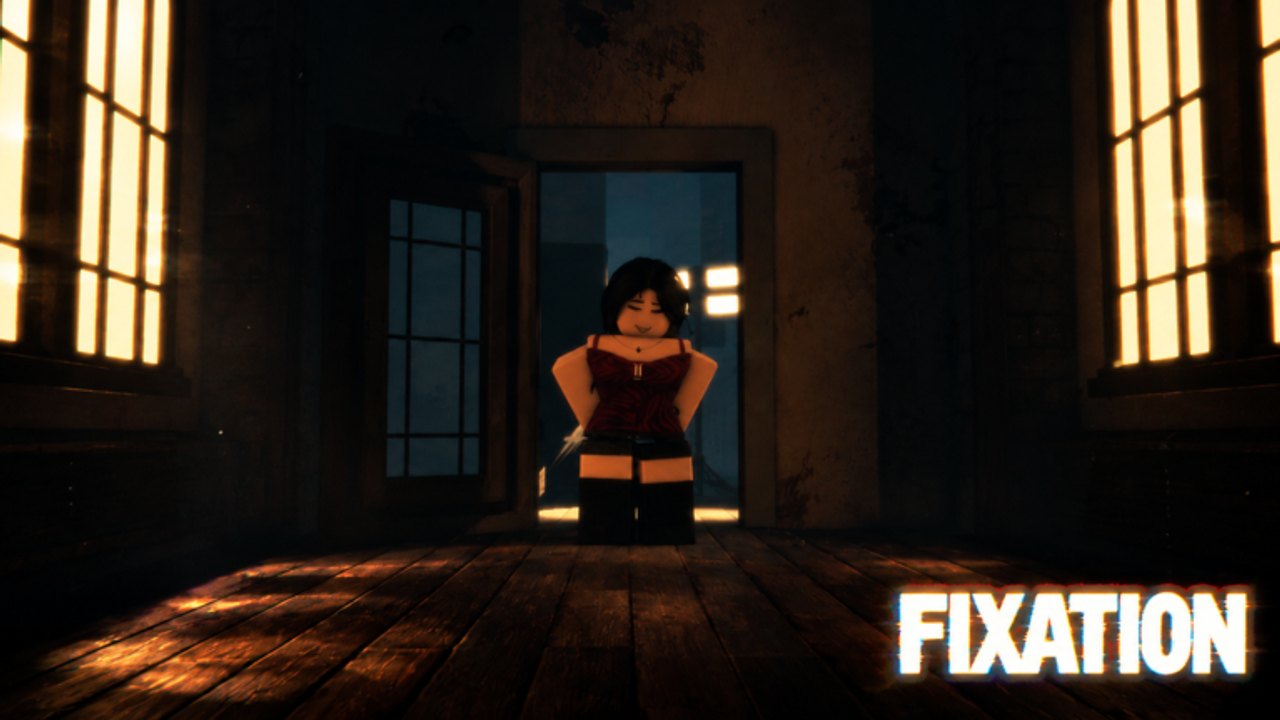
Survivors in FIXATION share one job: still be standing when the hunter is not. There is no published class select with numeric stats, so this list ranks habits. If you copy a “best character” graphic from another Roblox wiki, you will queue into the house with the wrong mental model. Use this page with how to survive and the survivors role page.
S tier — information first
S-tier survivors call the hunter the moment they see a red dress in a doorway. They ping a direction even if they die doing it. They do not wait for a perfect sentence. “Hall, left, moving” is enough. They also leave a room before it becomes a trap. Stacking four people in the nicest lamp-lit space is how a 1vAll round becomes a 1v1 with extra corpses.
S-tier players pre-plan an exit. Every room in the official house shots has more than one way out: a second door, a hall, a window wall that at least lets you see the chase coming. They do not crouch in the first closet they find. The Fixation player looks there first.
A tier — objective without greed
A-tier survivors still do the round’s work — opening a path, holding a door, watching a wing — but they abort when the hunter commits. They understand that a completed task on a dead body is worth zero. They rotate as a pair, not as a blob and not as four disconnected solos. Online co-op is the mode; playing it like a single-player horror walk is how A-tier drops to C.
They also manage audio. Running on wood floors in the house is loud. They walk when they do not need distance, and they sprint only to break line of sight. Read controls if your camera fight is louder than your footsteps.
B tier — decent aim, late calls
B-tier is the average public lobby. They know the hunter is scary. They hide. They sometimes live. They rarely tell anyone why. A B-tier player can still win if the hunter overchases, but they will not carry a team. Improve by talking earlier and by learning one loop from the walkthrough instead of inventing a new hiding spot every death.
C tier — magnet for the knife
C-tier survivors teabag, stand in doorways to film a clip, or follow the hunter “to help.” They also recycle the same furniture hide after it already failed. The obsessed character in the key art is looking for you. Do not make the search trivial.
C-tier also includes the player who AFKs in the lobby after a code search. If the codes hub is empty, close it and play. Standing still is a free down.
D tier — throws the server
D-tier is grief: blocking teammates in a corner, false calling the opposite wing, or injecting a script that highlights everyone and then pretending it was a lucky peek. That last one belongs on script safety. It is not a skill tier. It is an exit from the player pool.
How to move up a letter
- Play two rounds only as a caller. Do not chase clips.
- Watch one hunter round so you know what they see. Use how to play as the Fixation.
- Queue with at least one friend using the co-op guide.
- After a patch, re-read the updates hub. Lighting changes shuffle this list.
Compare notes with the Fixation tier so you understand the other side of the same doorway.
Frequently Asked Questions
Quick answers to the most common questions.
Who is the best survivor character?
FIXATION is not a collectible roster. Improve habits on this list and in how to survive.
Is hiding S-tier?
Only as a reset. Static hiding is C-tier once the hunter has seen the spot.
Should I play silent?
Not in co-op. Calls are S-tier. Silence is how public lobbies wipe.
Does ping matter?
Yes. High ping makes door checks late. Use controls to keep camera input clean anyway.